What’s shaping the future of container transport software?
Container transport is more than just simply about moving goods from A to B. It’s the careful choreography of operational transport, borders, vehicles and staff. The people in charge of planning these container movements are like chefs in anextremely hectic kitchen. Except, instead of timing the plating of food, they are constantly looking for ways to simplify the shifting dynamics of routes, schedules, ports, vessels, drivers and compliance.
This article explores how new advancements in container transport systems can take the chaos out of container logistics by giving planning operators some specific tools to more easily connect the dots.
Stop Chasing, Start Integrating
This one is simple. When all of the relevant information is automatically populated into a single, central interface, half the job is already done. Integration is a foundational tool for optimised transport planning.
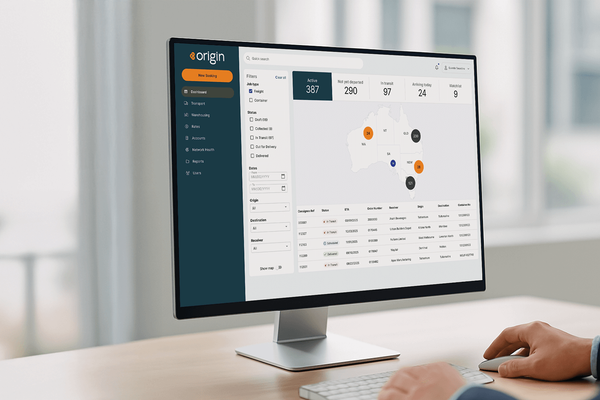
An integratedTransport Management System (TMS)streamlines the flow of data between internal and external systems. Not only does this collect all of the required information into a unified and more easily accessible source, it eliminates the need to chase down emails / data from other systems and stops the offline manual spreadsheet manipulations that often occupy so much time.
Here are some specific ways in which integrations are simplifying container transport:
- Automatic population of client bookings
- Vessel schedules and ETAs
- Up-to-date container availability
- Managing the advanced booking of VBS timeslots at ports/terminals
- Direct integration with clients to send real-time updates on order status, automated order creation, shipment tracking and delivery information.
- Direct integration to customs clearances and holds on containers and cargo
Integration instantly creates real-time visibility across the entire operation and isthemissing ingredient for many container transport operators.
Dynamic transport planning tools
Orchestrating container transport is a precise science. From route optimisation to capacity fluctuations and demand management, transport planners must be able to simultaneously coordinate multiple elements to deliver containers.
Some of these (often unaligned) elements include:
- Vehicle types
- Driver availability
- Container types
- Specialised transport set-ups (e.g. side-loading trucks)
- Terminal schedules
- Client schedules
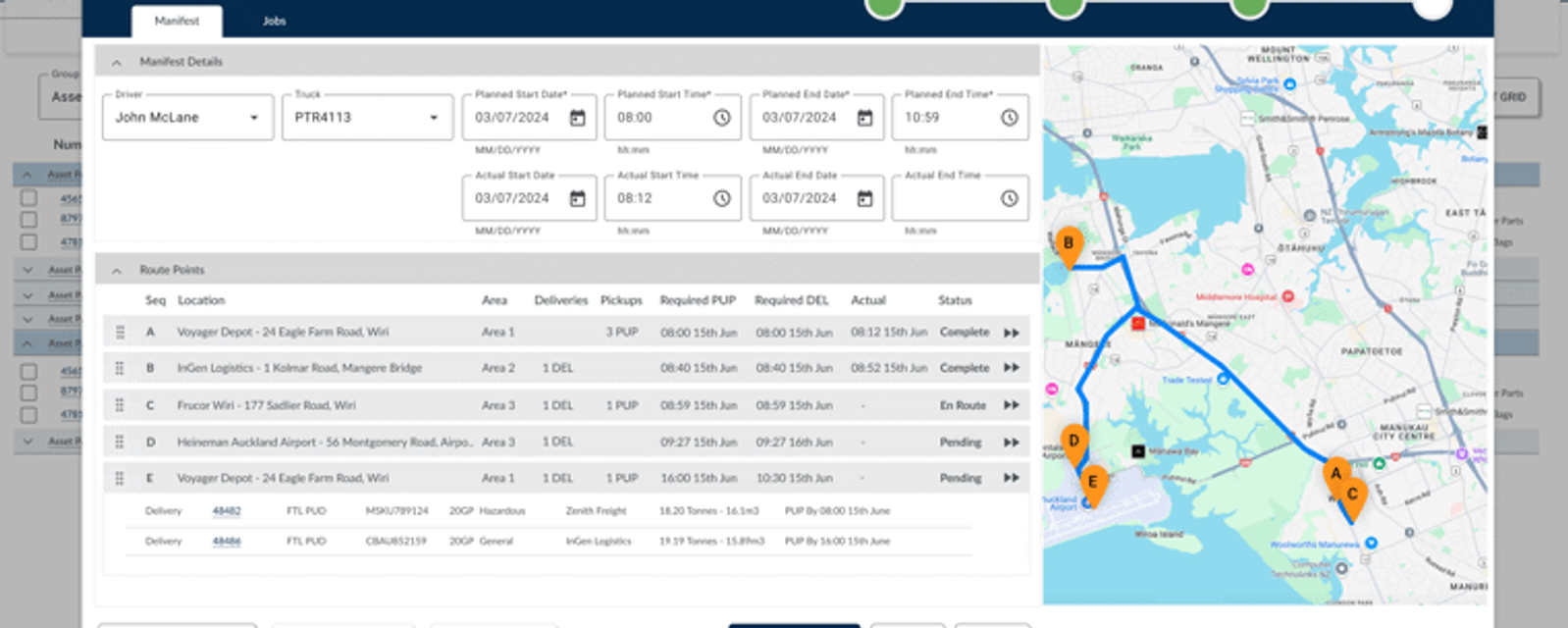
Software can play a crucial role in simplifying how planners manage these complexities. For example, modern interfaces empower planners with user-friendly data visualisation, enabling faster, smarter work. Features like personalised data organisation, drag-and-drop functionality, dynamic route mapping and filterable views highlight priority tasks and boost efficiency.
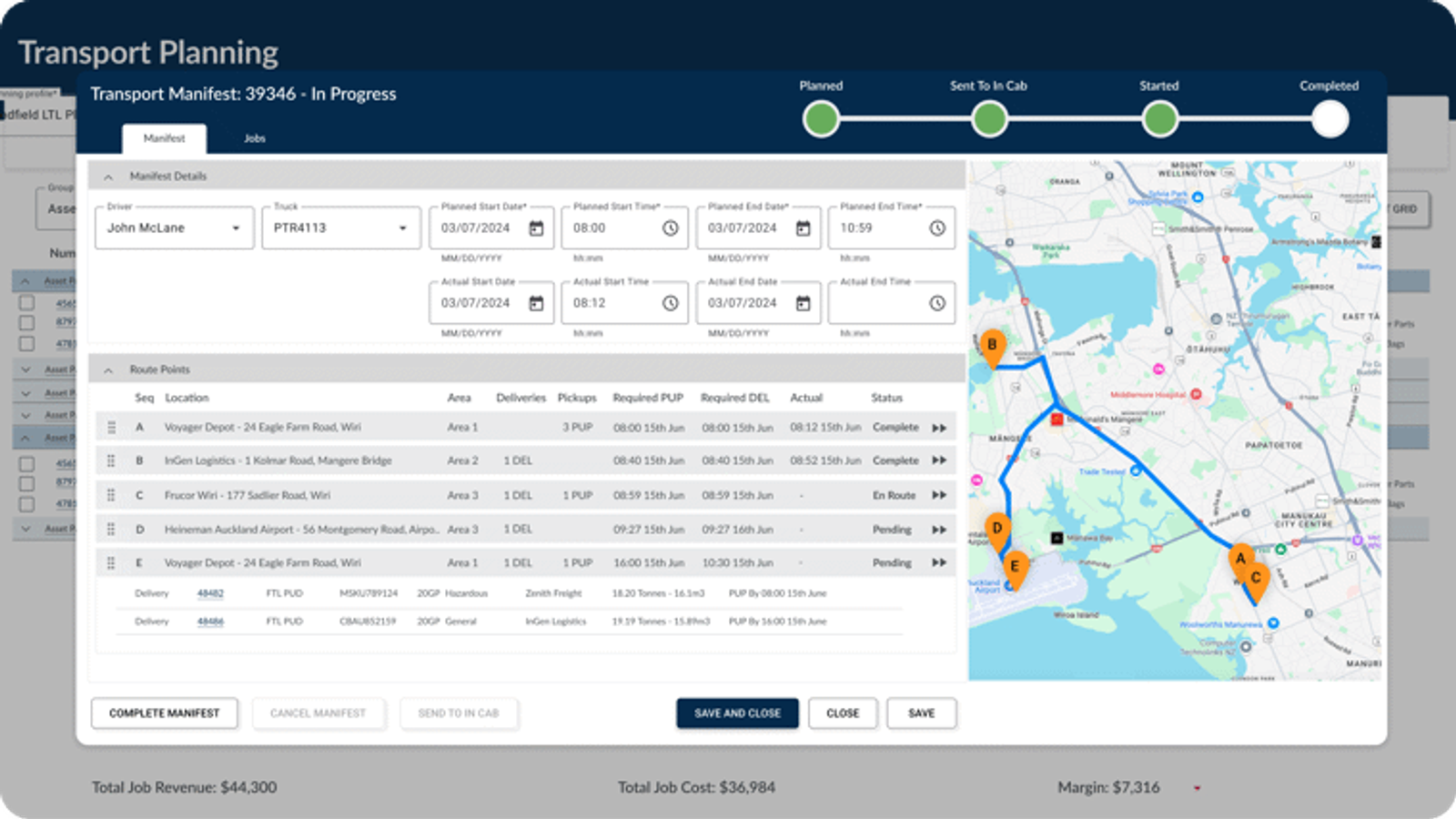
Basically, it provides a digital whiteboard that is constantly updating, giving planners the option toproactivelycompensate for overloads or shortfalls in specific operational areas. In short: these planning tools help create timely deliveries, reduce fuel consumption, lower operational costs and boost customer satisfaction.
Putting Power Directly In Your Hands
One of the key issues for planners is making sure that everyone across the organisation has access to the same information. This is especially important during the day-to-day operations when planners have to make quick reactions to evolving or unforeseen changes in circumstance.
A mobile app is a powerful tool that allows planners to obtain and synchronise the information in the field with what’s happening in the command centre. This means that drivers / loaders and other ground staff can get on with their jobs without having to recalibrate every task they perform with the central planning team.
In addition, planners can plug-in much more quickly to real-time shipment location data across the fleet, giving them the flexibility they need to makeinformedadjustments on the fly.
The mobile app not only speeds up job completion, it also facilitates the instant capture and upload of on-site data and creates a much clearer picture across the entire supply chain.
Unlocking Untapped Potential
There is no silver bullet solution to overcoming the challenges associated with planning container transport. The scale and complexity of the operation means there will always be a need for smart and spontaneous decision makers.
However, the right software tools can certainly make the lives of these decision makers easier. By adopting solutions that are adaptable and customer-centric the playbook for container transport planners can be simplified, presenting them with easier buttons to push when organising container movements.
Need to solve a similar challenge?
Let's talk about how the Origin core engine can be adapted and tailored to suit your specific physical logistics requirements.
Book a consultation